The 10 Most Common German Mistakes for English and Spanish Speakers (and How to Fix Them)

The 10 most common German mistakes made by English and Spanish speakers, with wrong and right sentences and a quick fix for each one.
German Perfekt: When to Use Haben and When to Use Sein

Haben or sein in the German Perfekt? Learn the simple rule for the past tense, how to build the participle, and the most common mistakes, with clear examples.
Why “Halb Drei” Means 2:30: German Time Telling Explained

Does “Es ist halb drei” mean 2:30 or 3:30? Learn how German time telling works, from halb and Viertel to the 24-hour clock, with simple rules and examples.
Wenn, Als, Ob: The 3-Second Trick to Never Mix Them Up Again

Wenn, als or ob? Use a simple 3-step trick to pick the right German word for “if”, “when” and “whether”, with clear examples and common mistakes.
Mal, Ja, Eben, Halt: The German Filler Words That Make You Sound Native

Mal, ja, eben, halt, denn, eigentlich: learn the German modal particles that make your German sound natural, with simple rules and everyday examples.
Kennen vs. Wissen: Two German Ways to Say “I Know”

Ich kenne Anna. Ich weiß, wo sie wohnt. Learn when to use kennen and when to use wissen, with simple rules and examples.
Tun in German: The Tiny Verb That Does It All (Do, Hurt, Sorry and More)

One small verb, three meanings: learn how to conjugate tun and use it in Das tut weh, Es tut mir leid and other everyday phrases.
German Modal Verbs: Können, Müssen, Wollen and More Explained
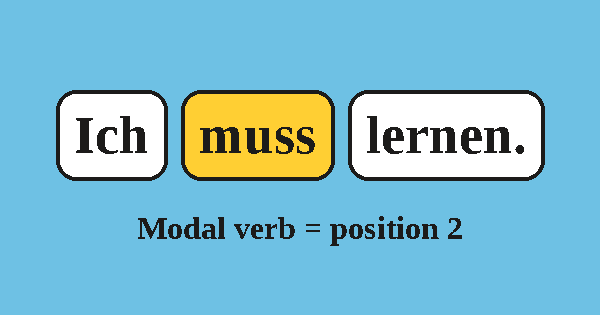
Learn German modal verbs können, müssen, wollen, dürfen, sollen and mögen with simple conjugation tables, word order and example sentences.
German Separable Verbs Explained

Ich stehe um 7 Uhr auf. Learn how German separable verbs like aufstehen and anrufen work, with clear rules and examples.
German Word Order: The Simple Verb-Second Rule
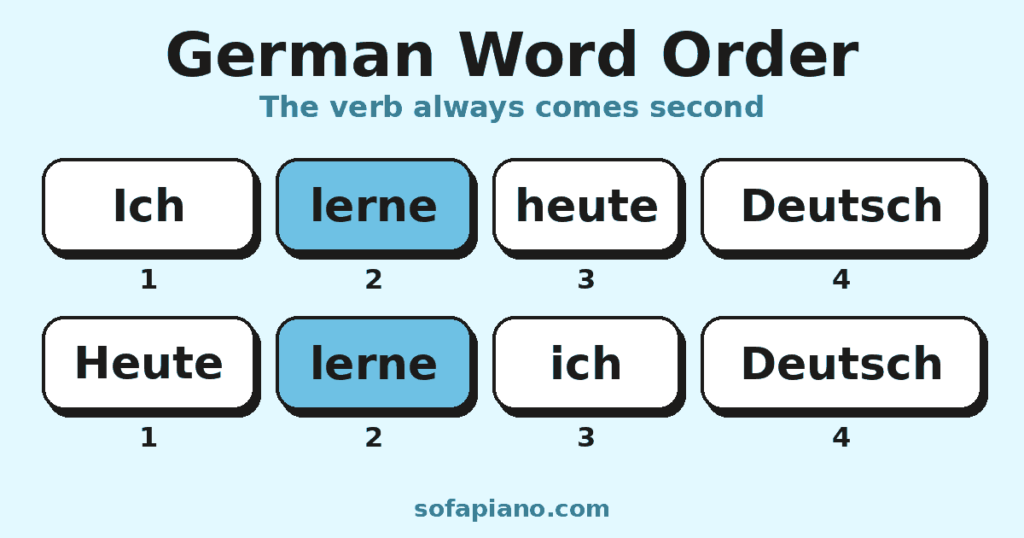
Ich lerne heute Deutsch. Heute lerne ich Deutsch. Understand German word order with one simple rule: the conjugated verb goes in position 2.