Write German by Hand: Why Handwritten Sentences Make Vocabulary Stick
Should you write German by hand or type it? Learn why handwriting helps vocabulary stick and how to practise with full sentences.
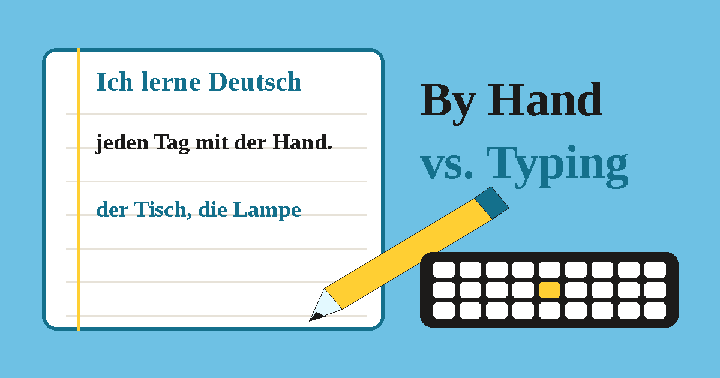
You know the feeling: you type a new German word, feel proud, and forget it two hours later. If you want to write German by hand instead, is it really worth the effort? In short: yes, for learning new words. Typing is faster, but handwriting slows you down in a useful way, and that extra effort helps your brain keep the word.
Why writing German by hand helps you remember words
When you write by hand, you form every letter yourself. Your eyes, your hand and your memory all work together. Typing is different: every letter is the same simple key press, so your brain has less to “grab”.
Does handwriting really improve memory? Research points in that direction, but it is not magic. A 2024 EEG study from Norway found more widespread brain activity when students wrote by hand than when they typed. Earlier studies on letter learning found similar effects. Not every study agrees, so think of handwriting as a helpful tool, not a guarantee.
Slow is good
Handwriting is slower, so you must decide what is important. You notice the ending of a verb, the capital letter of a noun, the umlaut. This small pause is the reason the word sticks.
Handwriting vs. typing: a quick comparison
| By hand | Typing | |
|---|---|---|
| Speed | Slow | Fast |
| Memory | Often stronger | Often weaker |
| Spelling (ä, ö, ü, ß) | You practise every letter | Autocorrect helps (and hides mistakes) |
| Best for | New words and grammar | Long texts, emails, chatting |
How to write German words by hand (the smart way)
How many times should you write a word? You do not need to fill a whole page with it. Copying the same word twenty times is boring and your brain switches off. A better idea: write it once or twice, then use it in a real sentence.
Write sentences, not word lists
A single word is easy to forget. A sentence gives it a job. Instead of writing der Tisch again and again, write Der Tisch ist neu. Now you also practise word order, the verb and the article.
Always write the article with the noun
German nouns come with der, die or das, and you must learn them together. Try one colour for each: blue for der, red for die, green for das. Writing by hand makes colour coding easy.
Say it out loud while you write
Speak each sentence quietly as you write it. Now you use your hand, your eyes and your ears. That is three ways to remember one sentence.
When typing is still a good idea
Is typing bad for learning German? No. It is perfect when you write long messages, chat with a tutor, or practise fast. Typing also helps you get used to the German keyboard. The best plan for most learners is to combine both: hand for learning, keyboard for using.
A simple 10-minute routine
- Choose 5 sentences at your level (A1–B2).
- Read each sentence aloud once.
- Cover it and write it by hand from memory.
- Check your spelling, articles and word order.
- Repeat the next day. Short and regular beats long and rare.
How long until you see results? Most learners notice that words come back faster after one or two weeks of daily practice. Consistency matters more than perfect handwriting, so do not worry if it looks messy.
Your turn
Grab a pen and a piece of paper and write your first three German sentences today. Then test yourself with real example sentences and get instant feedback.