German Adjective Endings Made Simple: One Idea, Three Patterns
-e, -en, -er or -es? Learn German adjective endings with one simple idea, three patterns, clear tables, examples and the most common mistakes.
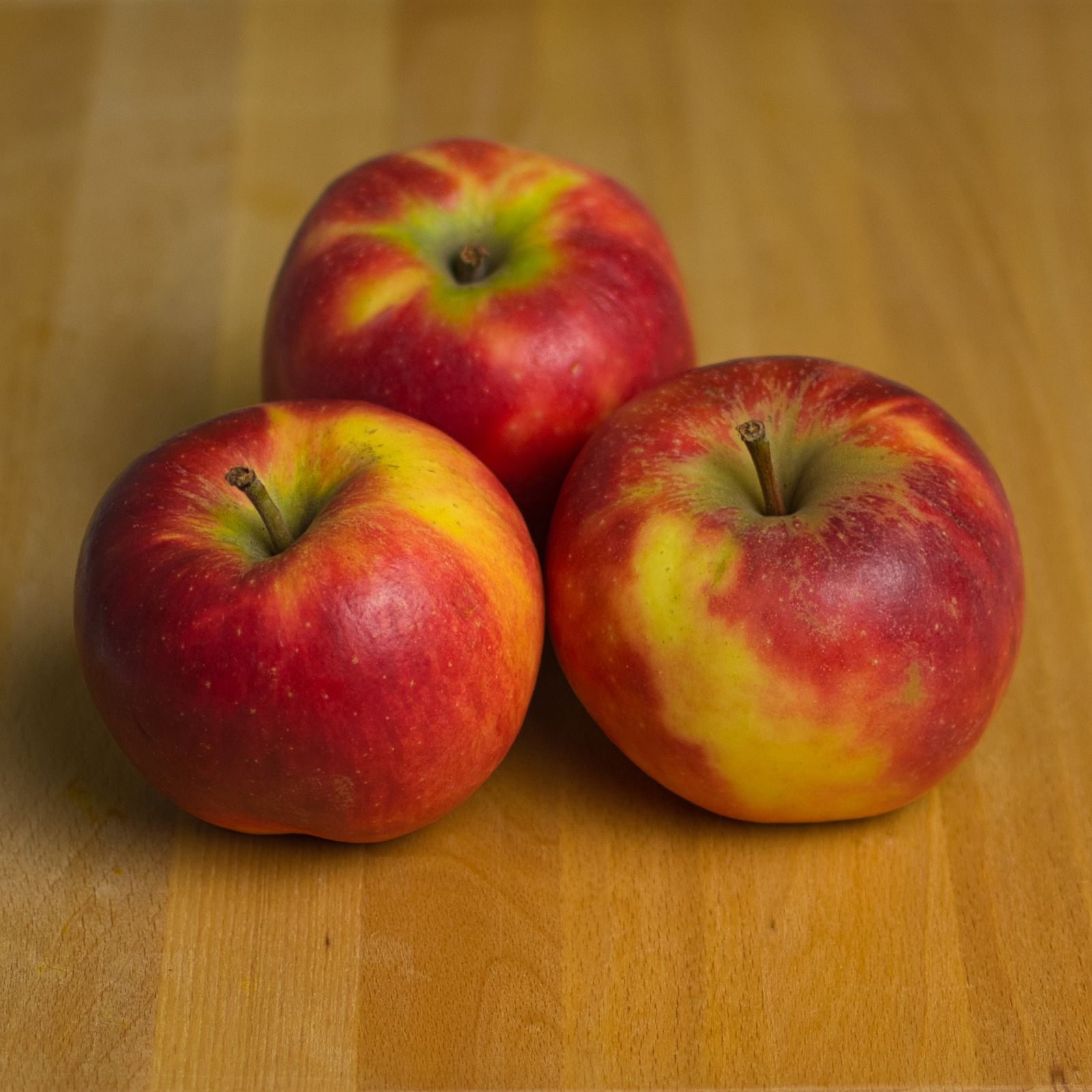
Der rote Apfel. Ein roter Apfel. Rote Äpfel. Same adjective, three different endings. German adjective endings are the topic many learners quietly skip, because the full tables look like a wall of -e, -en, -er and -es. The good news: behind all those tables there is one simple idea and three patterns. Once you see them, the endings stop looking random.
First: when does an adjective get an ending?
Only when it stands directly before a noun. After sein, werden or bleiben, the adjective has no ending at all:
- Der Apfel ist rot. – The apple is red. (no ending)
- Der rote Apfel liegt auf dem Tisch. – The red apple is on the table. (ending)
- Das Wetter wird schön. – The weather is getting nice. (no ending)
So before you think about tables, ask: is there a noun right after the adjective? If not, you are done.
The one big idea
In German, every noun phrase has to show its gender and case somewhere. Usually the article does that job: der, den, dem, des all tell you exactly what is going on.
- If the article already shows gender and case clearly, the adjective can relax. It only takes -e or -en.
- If there is no article, or the article does not show it, the adjective has to do the job. It takes the ending of der/die/das.
That one idea gives you three patterns. If you need a refresher on the cases themselves, read our guide to accusative vs. dative first.
Pattern 1: after der, die, das
This pattern also applies after dieser, jeder, welcher, jener and alle (plural). The article shows everything, so the adjective only needs two endings: -e and -en.
| Case | Masculine | Feminine | Neuter | Plural |
|---|---|---|---|---|
| Nom. | der gute Mann | die gute Frau | das gute Kind | die guten Kinder |
| Acc. | den guten Mann | die gute Frau | das gute Kind | die guten Kinder |
| Dat. | dem guten Mann | der guten Frau | dem guten Kind | den guten Kindern |
| Gen. | des guten Mannes | der guten Frau | des guten Kindes | der guten Kinder |
The rule: -e in the five singular spots where the article looks like the dictionary form (nominative singular, plus accusative feminine and neuter). Everywhere else: -en.
- Der neue Kollege ist sehr nett. – The new colleague is very nice.
- Ich nehme die blaue Jacke. – I'll take the blue jacket.
- Kennst du den neuen Kollegen? – Do you know the new colleague?
- Wir sprechen mit der jungen Frau. – We are talking to the young woman.
- Alle neuen Studenten haben heute frei. – All the new students have the day off today.
Pattern 2: after ein, kein, mein
This pattern applies after ein, kein and the possessives mein, dein, sein, ihr, unser, euer. It is almost the same as pattern 1. There are only three places where ein has no ending of its own. There, the adjective has to show the gender:
| Case | Masculine | Feminine | Neuter | Plural |
|---|---|---|---|---|
| Nom. | ein guter Mann | eine gute Frau | ein gutes Kind | keine guten Kinder |
| Acc. | einen guten Mann | eine gute Frau | ein gutes Kind | keine guten Kinder |
| Dat. | einem guten Mann | einer guten Frau | einem guten Kind | keinen guten Kindern |
| Gen. | eines guten Mannes | einer guten Frau | eines guten Kindes | keiner guten Kinder |
The rule: like pattern 1, but -er for masculine nominative (der → -er) and -es for neuter nominative and accusative (das → -es).
- Das ist ein guter Film. – That is a good film.
- Ich habe ein neues Handy. – I have a new phone.
- Sie hat einen kleinen Hund. – She has a small dog.
- Ich fahre mit meinem alten Auto. – I'm driving my old car.
- Wir haben keine frischen Eier mehr. – We have no fresh eggs left.
Pattern 3: no article at all
No article means nobody shows the gender and case, so the adjective takes over. It simply copies the last letter of der/die/das: der → -er, den → -en, dem → -em, die → -e, das → -es.
| Case | Masculine | Feminine | Neuter | Plural |
|---|---|---|---|---|
| Nom. | guter Wein | gute Milch | gutes Brot | gute Freunde |
| Acc. | guten Wein | gute Milch | gutes Brot | gute Freunde |
| Dat. | gutem Wein | guter Milch | gutem Brot | guten Freunden |
| Gen. | guten Weines | guter Milch | guten Brotes | guter Freunde |
The only exception is the genitive masculine and neuter (guten Weines), and you will rarely need it. You see pattern 3 a lot with food and drinks, plurals, and after numbers or words like viele, einige, wenige:
- Ich trinke gern heißen Tee. – I like drinking hot tea.
- Frisches Brot schmeckt am besten. – Fresh bread tastes best.
- Wir treffen uns mit alten Freunden. – We are meeting up with old friends.
- Ich habe viele neue Wörter gelernt. – I have learned a lot of new words.
You already know pattern 3: Guten Morgen! Guten Tag! Gute Nacht! Herzlichen Glückwunsch! These are accusative, because there is a hidden Ich wünsche dir… (I wish you…) in front. That is why it is guten Morgen and not guter Morgen.
The 3-question shortcut
When you are speaking and have no time for tables, ask yourself:
- Is there an article before the adjective? No → pattern 3. Copy the ending of der/die/das.
- Is it der, die, das (or dieser, jeder…)? → pattern 1. -e in the five singular spots, -en everywhere else.
- Is it ein, kein, mein…? → pattern 2. Like pattern 1, but -er (masculine nominative) and -es (neuter nominative and accusative).
Of course, all of this works best when you know the gender of the noun. If that is still a weak spot, try our 5 patterns for der, die, das.
Two or more adjectives
Easy: all adjectives get the same ending.
- Wir haben einen großen, schönen Garten. – We have a big, beautiful garden.
- Sie kommt mit dem neuen roten Auto. – She is coming in the new red car.
Small spelling changes
- hoch → hoh-: der hohe Berg – the high mountain
- dunkel → dunkl-: das dunkle Zimmer – the dark room
- teuer → teur-: ein teures Hotel – an expensive hotel
- lila, rosa, prima: usually no ending in written German: ein rosa Kleid – a pink dress
Common mistakes
- Forgetting -er after ein. Wrong: Er ist ein gute Freund. Right: Er ist ein guter Freund.
- Forgetting -es with neuter nouns. Wrong: Ich habe ein neue Auto. Right: Ich habe ein neues Auto.
- Using -e in the dative. Wrong: mit meinem neue Auto. Right: mit meinem neuen Auto.
- Double marking after das. Wrong: Das neues Haus ist schön. Right: Das neue Haus ist schön.
- No ending without an article. Wrong: Ich trinke kalt Wasser. Right: Ich trinke kaltes Wasser.
- Adding an ending after sein. Wrong: Der Film ist langweiliger. (That means "more boring".) Right: Der Film ist langweilig.
Want to see more typical errors? Check our list of the 10 most common German mistakes.
Don't learn the tables, learn the chunks
Nobody speaks German by checking a table in their head. Native speakers have heard mit dem nächsten Zug or einen schönen Tag thousands of times, so the ending just sounds right. You can get there too by learning adjectives together with their article and noun, in full sentences:
- Ich wünsche dir einen schönen Tag! – Have a nice day!
- Ich nehme den nächsten Zug. – I'll take the next train.
- Wir wohnen im ersten Stock. – We live on the first floor.
- Ein großes Bier, bitte! – A large beer, please!
- Mit freundlichen Grüßen – Kind regards
Adjective endings are usually an A2 to B1 topic. See where they fit in the big picture in our guide to German grammar by level.
Your turn
Pick three things on your desk and describe each one three times: with der/die/das, with ein/eine, and without an article in the plural. For example: der schwarze Stift – ein schwarzer Stift – schwarze Stifte. Then practise with real example sentences and get instant feedback on every word.